

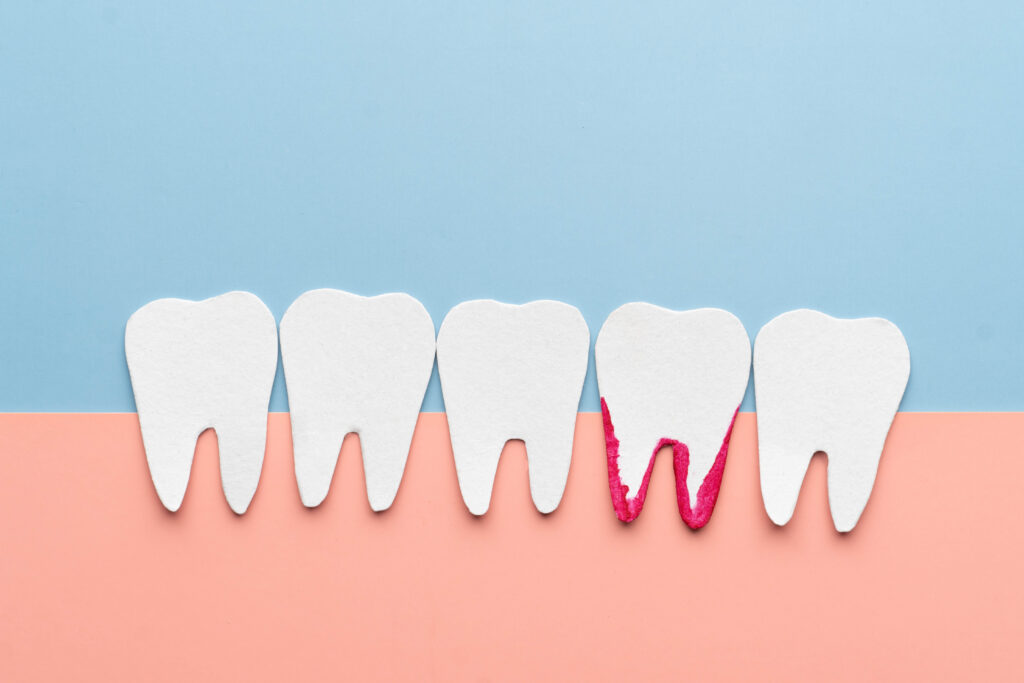
Your mouth is doing a lot more than just chewing food and flashing a smile. It functions as a gateway to the rest of your body, and what happens in your gums doesn’t always stay in your gums. In fact, gum disease is linked with several health conditions, including heart disease, diabetes, and cognitive decline.
At Floss Lincoln Park, we believe that understanding the bigger picture of oral health helps our patients make more informed decisions about their care. Dr. Delone Jouja and Dr. Martha Silva bring a whole-body perspective to dentistry, combining advanced training with a genuine commitment to helping every patient in Chicago’s Lincoln Park neighborhood and surrounding communities live healthier lives.
What Is Gum Disease?
Gum disease, also called periodontal disease, is a bacterial infection that affects the tissues and bone supporting your teeth. It typically starts with gingivitis and can progress to periodontitis if left untreated. At this more advanced stage, the infection causes gum tissue to pull away from the teeth, creating pockets where bacteria thrive and bone begins to break down.
Gum disease is more common than most people realize, and it often progresses significantly before obvious symptoms appear. That’s one reason why routine dental visits are so important. Regular cleanings and exams allow us to catch and manage gum disease early, before it has a chance to affect more than just your smile.
How Your Gums Affect Your Overall Health
There are two main ways gum disease can affect the rest of your body. The first involves the bacteria themselves. In people with periodontal disease, harmful bacteria in infected gum tissue can enter the bloodstream during everyday activities like chewing or brushing, potentially triggering inflammation or infection elsewhere in the body.
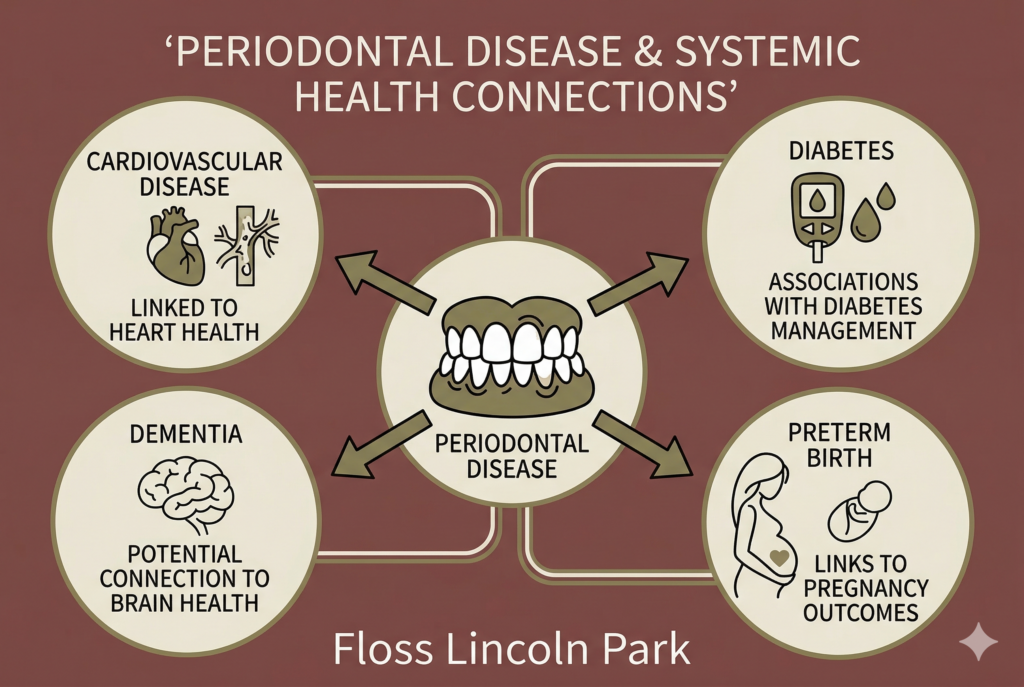
The second pathway involves the body’s immune response. Gum disease activates a prolonged inflammatory reaction in the mouth, and that chronic inflammation can elevate inflammatory markers in the bloodstream. According to the National Institute of Dental and Craniofacial Research, scientists have uncovered associations between periodontal disease and conditions including cardiovascular disease, diabetes, dementia, and preterm birth. While these connections are still being studied, they are well established and taken seriously.
Warning Signs of Gum Disease You Shouldn’t Ignore
Gum disease often develops quietly, but there are signs that something may be off. Catching them early puts you in a much better position for successful treatment.
Watch for any of the following symptoms:
- Red, swollen, or tender gums: Healthy gum tissue is firm and pink, so any change in color or texture warrants attention.
- Bleeding when brushing or flossing: This is often one of the first signals of gingivitis and should not be dismissed as normal.
- Persistent bad breath: Bacteria accumulating below the gumline release compounds that cause ongoing bad breath, even with regular brushing.
- Gums pulling away from teeth: Receding gums expose tooth roots and create deeper pockets where bacteria can worsen the infection.
- Loose or shifting teeth: Advanced periodontitis causes bone loss, which can lead to instability over time.
If you have any of these symptoms, mention them at your next visit. Early intervention is always more effective than waiting for the condition to progress.
How We Treat Gum Disease
Effective treatment depends on how far the condition has progressed. In the early stages, a thorough professional cleaning can clear away plaque and tartar and give the gums an opportunity to heal. More advanced cases may require scaling and root planing, a deep-cleaning procedure that removes bacteria below the gumline and smooths root surfaces to discourage reattachment of harmful deposits.
Our restorative dentistry team is experienced in managing the full range of periodontal conditions, and we approach every case with the same thoroughness and compassion that defines our practice.
Protect Your Gums and Overall Health at Floss Lincoln Park
Gum disease is not just a dental issue. It is a health issue, and addressing it is one of the most meaningful steps you can take for your overall well-being. The doctors at Floss Lincoln Park bring a well-rounded clinical perspective to every patient interaction. Dr. Silva’s advanced training includes over 600 hours of continuing education through the University of Florida School of Dentistry, and Dr. Jouja’s background in broader healthcare informs a genuinely whole-body approach to dental care.
Whether you are due for a routine cleaning, noticing signs of gum irritation, or simply want to understand how your oral health fits into your bigger health picture, our team is ready to help. Contact us today to schedule an appointment at our Lincoln Park office.


