

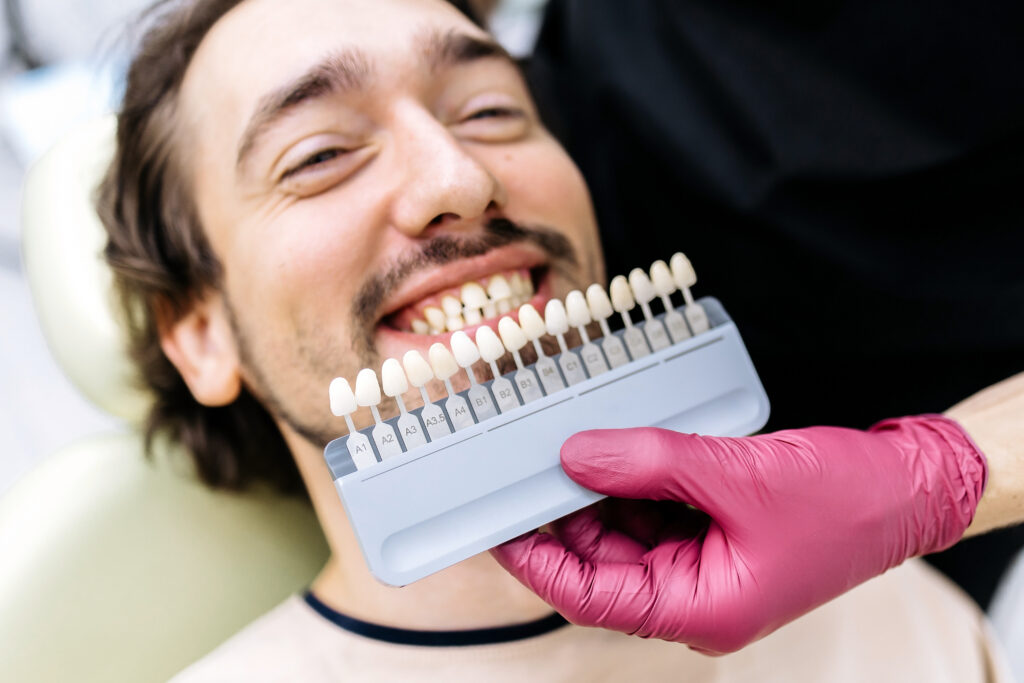
A chipped front tooth or a stubborn coffee stain can make you self-conscious about smiling in photos, at work, or during a first date. The good news is fixing these concerns rarely means a lengthy or complicated procedure, and the right cosmetic option depends mostly on how much correction your teeth actually need.
At Floss Lincoln Park, we help patients throughout Lincoln Park sort through their cosmetic dentistry options so the fix matches the problem rather than the other way around. Dental bonding and veneers both correct chips and discoloration, but they work in different ways, cost differently, and hold up differently over time, so understanding those distinctions before your consultation can make the conversation with our team a lot more productive.
How Dental Bonding Repairs Teeth
Dental bonding uses a tooth colored composite resin that we apply directly to the surface of your tooth, then sculpt and shape until it matches the tooth next to it. Once the shape looks right, we harden the resin with a curing light and polish it so the texture and shine blend with your natural enamel.
This approach works well for small chips, minor gaps, and localized discoloration that does not extend across multiple teeth. Because bonding adds material rather than removing it, we often complete the entire procedure in a single visit without the need for anesthesia. It also tends to be one of the more budget-friendly cosmetic options we offer, which makes it an accessible entry point for patients testing out cosmetic dentistry for the first time.
Bonding is not without tradeoffs. Composite resin is more porous than porcelain, so it may pick up stains from coffee, tea, or wine faster than other materials. The material can also chip under enough pressure, particularly if you grind your teeth at night or bite down on hard objects like ice or pens.
What Makes Veneers Different?
Veneers are thin custom shells, typically made from porcelain, that we bond to the front surface of your teeth rather than building up material directly on them. Because they are fabricated in a dental laboratory to match your desired shade and shape, veneers usually require two visits rather than one.
The Preparation and Placement Process
During your first appointment, we remove a small amount of enamel from the front of each tooth so the veneer sits flush and looks natural rather than bulky. We then take impressions or digital scans and send them to a lab, where technicians fabricate veneers to your exact specifications.
Once the veneers are ready, you return for a second appointment where we check the fit, make small adjustments, and permanently bond each veneer in place. The enamel removal step means veneers are considered a more permanent commitment than bonding, as that portion of the tooth will always need some form of covering going forward.
Why Patients Choose Veneers for Bigger Changes
Veneers tend to outperform bonding when patients want to correct several teeth at once or address more noticeable discoloration, uneven edges, or gaps. Porcelain resists staining better than composite resin, so veneers often keep their original shade longer with normal brushing and regular checkups.
For full smile transformations, we use digital smile design, which allows us to preview how veneers will look on your smile before any enamel is removed, so you can see the anticipated result and give feedback before we move forward with fabrication.
Comparing Cost, Durability, and Commitment
Cost is often the first question patients ask, and bonding is generally the less expensive option since it requires less material, a shorter appointment, and no lab fabrication. Veneers cost more upfront because of the custom lab work involved, but many patients find the investment worthwhile given how long a well-maintained veneer can last compared to bonding.
Longevity is where the two treatments diverge the most, and ongoing restorative materials research from the National Institute of Dental and Craniofacial Research highlights that dental materials degrade differently depending on how they are placed and what stresses they encounter in the mouth. That research lines up with what we see clinically. Consider these factors when weighing your options:
- Timeline: Bonding is usually finished in one visit, while veneers require at least two appointments spaced around lab fabrication.
- Reversibility: Bonding does not require enamel removal and can be adjusted or removed, while veneers permanently alter the tooth surface.
- Stain resistance: Porcelain veneers resist staining significantly better than composite resin over time.
- Scope of correction: Bonding suits isolated chips or small gaps, while veneers handle broader smile changes across multiple teeth.
Neither option is universally better since the right choice depends on how many teeth you want to address, your budget, and how much change you are hoping to see. Bringing photos of smiles you like to your consultation can help our team recommend the option that fits your specific goals.
Choose the Right Fit at Floss Lincoln Park
Whether bonding or veneers make more sense for your smile, our Lincoln Park team may be able to walk you through the tradeoffs in detail during a consultation. Dr. Delone Jouja focuses on creating a comfortable, trust-based environment for every patient, which matters most for anyone who has felt rushed through cosmetic decisions in the past. Dr. Martha Silva brings additional training from an ongoing two-year program through the University of Florida School of Dentistry toward a Mastership with the Academy of General Dentistry, adding depth to how our office approaches smile design cases that involve more than one tooth.
If a chipped tooth or persistent discoloration has been bothering you, the fastest way to find out which option fits your goals and budget is to have us take a look in person. You can contact our office to schedule a cosmetic consultation and get a personalized recommendation for your smile.


