In today’s market, there are many pathways to a brighter smile, and the right choice depends on your timeline, budget, and desired results. Professional teeth whitening delivers faster, more dramatic changes under supervised care, while at-home methods offer gradual improvement at a lower cost.
At Floss Lincoln Park, Dr. Delone Jouja and Dr. Martha Silva guide patients through whitening decisions tailored to their individual needs and dental health. We serve Lincoln Park residents and patients in Wicker Park, West Town, Noble Square, and Bucktown who want comprehensive cosmetic care backed by advanced technology and a genuine understanding.
Professional Whitening Delivers Controlled Results
In-office whitening uses concentrated bleaching agents that work faster than over-the-counter products. The process typically takes 60 to 90 minutes, and you will see immediate results. Your dentist applies a barrier to protect your gums and monitors the treatment to prevent sensitivity or uneven whitening.
Professional treatments can lighten teeth by several shades in a single visit. The controlled environment means your dentist adjusts the application based on how your teeth respond, addressing stubborn stains or areas needing extra attention.
At-Home Options Offer Flexibility
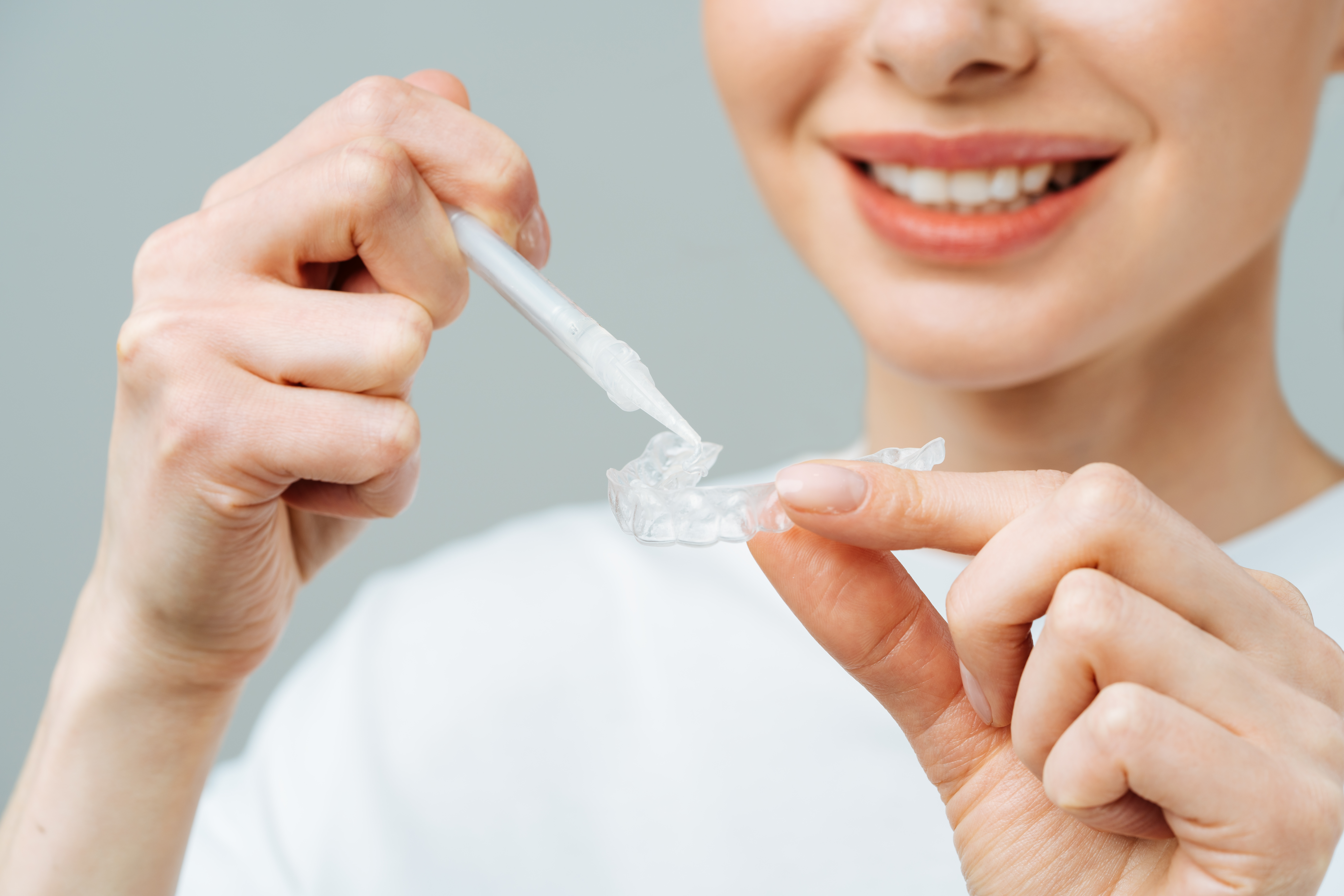
Dentist-provided take-home kits use custom trays fitting your teeth precisely, delivering professional-grade whitening gel over one to two weeks. You wear the trays for a specified time each day, gradually building to your desired shade. This method costs less than in-office treatment while still providing results superior to drugstore products.
Over-the-counter strips, gels, and toothpastes contain lower concentrations of whitening ingredients. These options are most effective for minor discoloration and require consistent use over several weeks to show improvement.
Understanding What Causes Staining
Your teeth accumulate stains from coffee, tea, red wine, and tobacco over time. Some discoloration comes from aging as enamel thins and the naturally yellow dentin beneath shows through. Certain medications and trauma can also darken teeth from within, requiring different treatment approaches than surface stains.
A professional evaluation determines whether your discoloration responds to whitening treatments. The American Dental Association notes that some stains don’t bleach effectively, and your dentist can recommend alternatives such as veneers or tooth bonding if whitening won’t achieve your goals.
Factors Influencing Your Teeth Whitening Choice
Your timeline is a key factor when choosing between professional and at-home whitening. If you need results for an upcoming event, in-office treatment delivers the fastest outcome. For gradual improvement without time pressure, at-home methods provide excellent value.
Sensitivity concerns also factor into your decision. Professional treatments include desensitizing agents and precise application to minimize discomfort. Your dentist adjusts the concentration and duration based on your tolerance. At-home kits allow you to control the pace, stopping if sensitivity develops and resuming when you’re comfortable.
Budget considerations affect most patients’ decisions. In-office whitening costs more upfront but requires less time investment. Take-home kits from your dentist offer cost-effective care with professional oversight. Drugstore products provide the lowest price but may take longer to show results and lack customization.
Managing Expectations and Maintenance
No whitening method produces permanent results. Your teeth continue accumulating stains from food, drinks, and lifestyle habits. Most patients need touch-up treatments every six months to a year to maintain their preferred shade.
Professional whitening typically lasts longer than over-the-counter methods because the higher concentration penetrates deeper into the enamel. Your dentist provides specific maintenance recommendations based on your whitening method and lifestyle factors affecting staining.
Some patients combine approaches, starting with professional treatment for immediate results and maintaining with periodic at-home applications. This strategy extends the effects of in-office whitening while controlling long-term costs.
Safety Considerations
Whitening products approved for consumer use pose minimal risk when used as directed, but misuse can damage enamel or irritate gums. Following instructions carefully prevents complications. Professional supervision adds an extra layer of safety, particularly if you have existing dental crowns, fillings, or gum disease.
Pregnant and nursing women should postpone whitening treatments. While no evidence suggests harm, dental organizations recommend waiting until after pregnancy and breastfeeding to avoid any potential risks.
Excessive whitening damages tooth enamel over time, regardless of the method used. Your dentist helps you find the balance between achieving your desired shade and protecting your long-term dental health.
Schedule Your Whitening Consultation at Floss Lincoln Park
Dr. Delone Jouja and Dr. Martha Silva bring years of combined experience to every whitening consultation at Floss Lincoln Park. Dr. Jouja studied at Midwestern University College of Dental Medicine-Illinois and creates a comfortable, trust-based environment for patients who may feel hesitant about dental visits. Dr. Silva earned her Doctor of Dental Surgery from the University of Illinois College of Dentistry and served as an active-duty dentist in the U.S. Army, gaining invaluable experience across all dental specialties.
The practice combines professional whitening treatments with custom take-home options, allowing you to choose the approach that fits your lifestyle and goals. Whether you prefer fast professional results or gradual at-home improvement, the team helps you achieve the confident smile you want while protecting your long-term dental health. Contact Floss Lincoln Park to discuss which whitening method works best for your unique situation.