

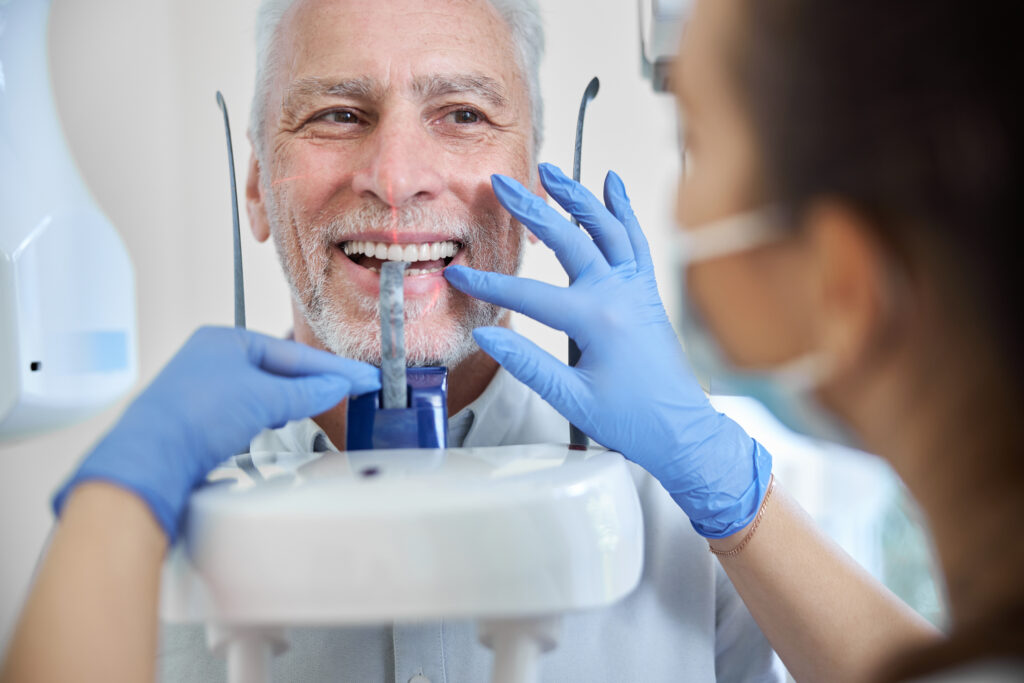
Your dentist brings out the X-ray equipment, and you find yourself wondering the same question you do every visit: Does this actually need to happen, or is it just routine? The truth is, dental X-rays are one of the most powerful diagnostic tools in modern dentistry, and the answer to how often you need them is more personalized than most people realize. When someone who genuinely understands your oral health history guides your care, X-rays become a strategic part of your appointments rather than a checkbox on a form.
We take this exact approach at Floss Lincoln Park, where our team provides thoughtful, individualized dental imaging for patients throughout Chicago. Rather than defaulting to a one-size-fits-all schedule, we evaluate your current oral health, risk factors, and history before recommending X-rays, so every image serves a clear clinical purpose for you.
Is There a Universal Schedule for Adult X-Rays?
One of the most common misconceptions about dental X-rays is that everyone should receive them on the same fixed timeline. In reality, frequency depends on several patient-specific factors that shift over time. A healthy adult in their thirties with no history of decay, gum concerns, or restorations will likely need X-rays far less often than someone managing an active condition or transitioning into a higher-risk stage of life.
The American Dental Association recommends patients only get X-rays when clinically necessary based on a thorough review of a patient’s medical and dental histories, prior imaging, and current clinical findings. Their 2026 updated guidelines reinforce the importance of using diagnostic imaging as a precision tool rather than a reflexive one.
What Actually Determines Your X-Ray Frequency
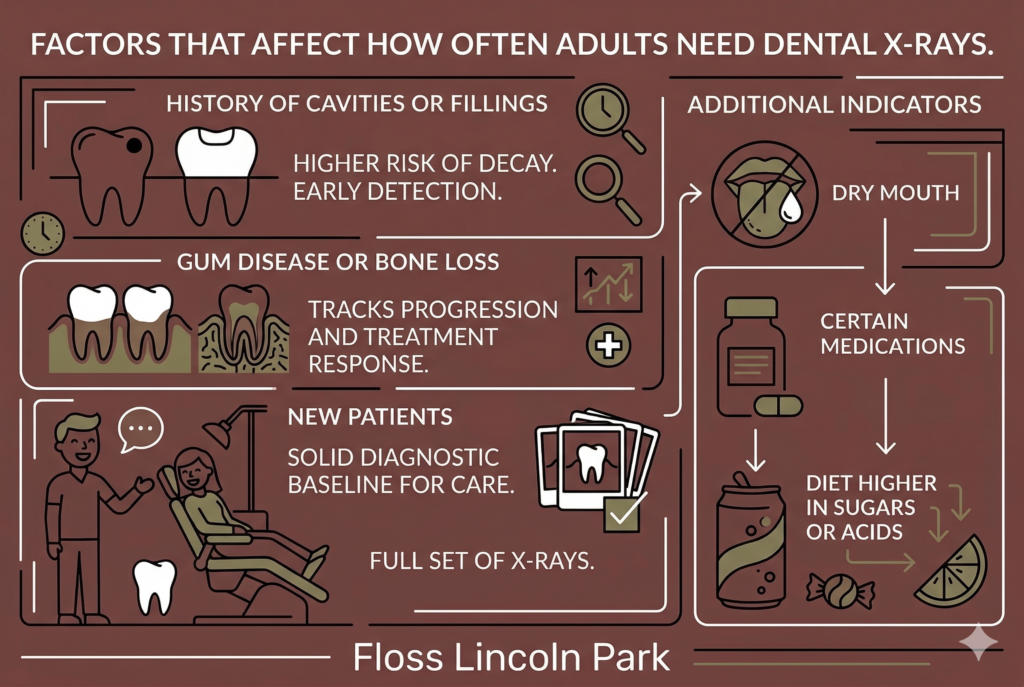
Several factors influence how often X-rays are clinically appropriate for an adult patient. A history of cavities or fillings increases your risk of developing new decay, which may require more frequent X-rays to catch problems early. Patients with gum disease or bone loss require periodic imaging to track how conditions are progressing or responding to treatment.
New patients also typically receive a full set of X-rays regardless of their history, giving their care team a solid diagnostic baseline to work from. Dry mouth, certain medications, and a diet higher in sugars or acids are additional indicators that more regular imaging may be warranted.
Types of X-Rays Adults Typically Receive
Not all dental X-rays are the same, and understanding which type is being recommended can help you feel more informed and confident during your visit. Our general dentistry care incorporates several imaging options depending on what we need to evaluate.
Bitewing X-rays are the most common type for routine monitoring. They capture the upper and lower back teeth in a single image, making them ideal for detecting cavities between teeth and checking the health of the supporting bone. Low-risk adults with healthy mouths may only need bitewings every two to three years, while higher-risk patients may benefit from annual imaging.
Periapical X-rays offer a view of the full length of specific teeth, including the roots and surrounding bone. These are often recommended when a patient has tooth pain or sensitivity, or when evaluating the need for a procedure such as a dental crown. Panoramic X-rays, which capture the entire mouth in a single wide image, are less common and typically reserved for specific clinical needs, like assessing wisdom teeth or evaluating jaw structure.
X-Rays and Your Long-Term Oral Health
Skipping X-rays to avoid radiation exposure is understandable, but it is worth knowing that modern dental imaging exposes patients to very minimal radiation. At Floss Lincoln Park, we use digital X-rays to capture detailed images of your teeth and supporting bone while using significantly less radiation than conventional film. For patients who are cautious about exposure, digital imaging offers real peace of mind.
Beyond the radiation advantage, digital X-rays produce sharper images that are immediately viewable on screen and easier to store and compare over time. When we can pull up your X-rays from two years ago and place them side by side with today’s images, we can track subtle changes in bone density, spot a cavity in its earliest stage, or catch the beginnings of gum disease before it progresses.
A small cavity identified on a bitewing can be addressed with a filling. The same cavity left undetected for another year or two may require a root canal or a dental crown, making well-timed digital imaging is such an important part of long-term dental health, not a formality.
Schedule Your Next Visit at Floss Lincoln Park
At Floss Lincoln Park, Dr. Delone Jouja and Dr. Martha Silva bring advanced training and genuine care to every patient evaluation, including decisions around diagnostic imaging. Our team takes the time to review your full health history and assess your individual risk profile before recommending any X-rays, so you never receive imaging that does not serve a clear purpose for your care.
If you are overdue for a dental visit or simply have questions about your X-ray schedule, we would love to help. Contact our office to schedule an appointment and experience the kind of thoughtful, personalized dental care Lincoln Park patients have come to rely on.


