

That throbbing ache that wakes you up at 2 a.m., the sharp zing when your coffee hits a certain tooth, and the gum that just won’t stop being tender no matter what you do aren’t quirks to brush off; they’re your body sending a very clear message. When the inner pulp of a tooth becomes infected or severely inflamed, a root canal is often the most effective way to relieve pain, save the tooth, and help you get back to living your life without wincing through meals.
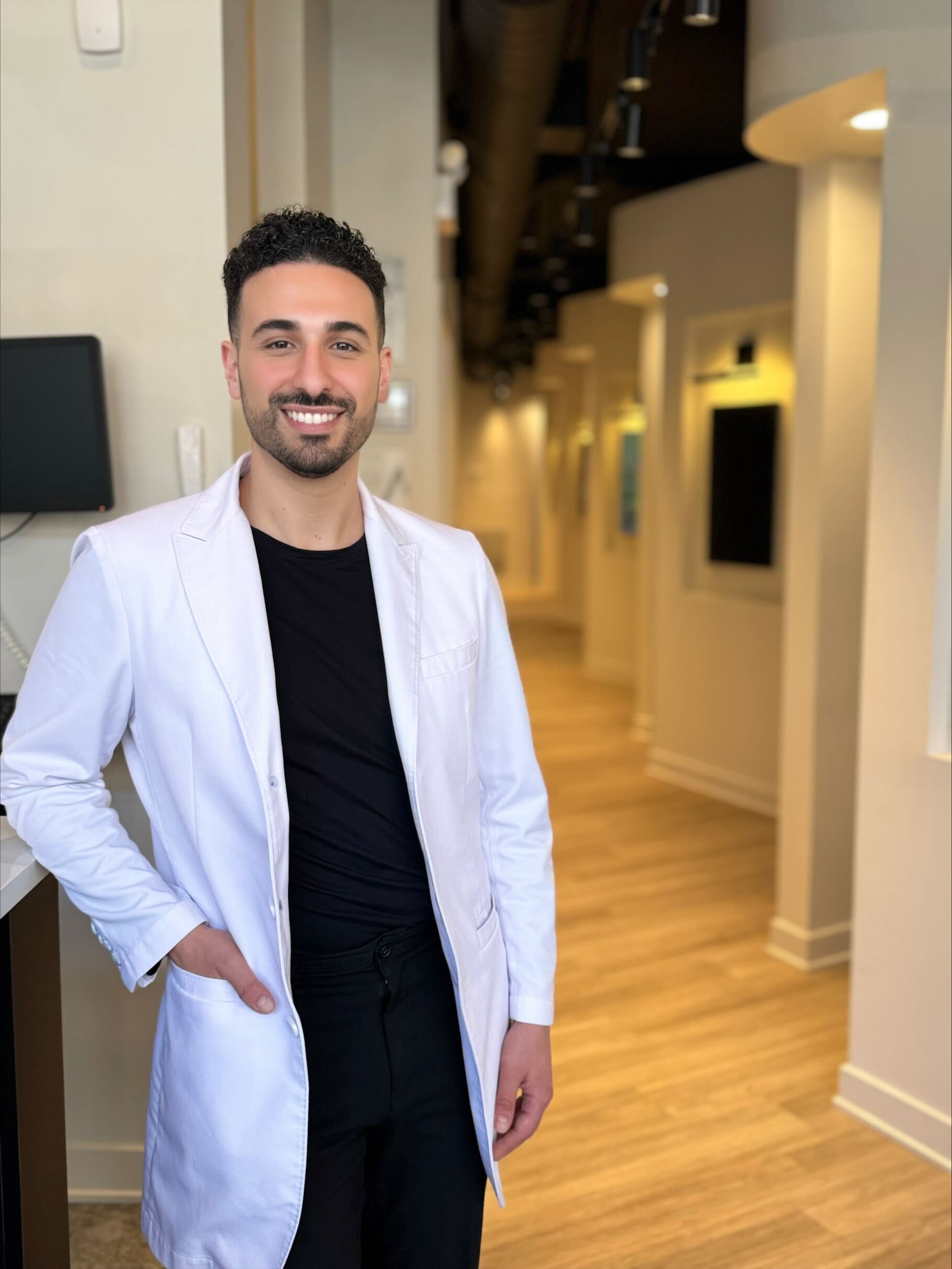
At Floss Lincoln Park, we understand that the words “root canal” can make even the most easygoing patient pause. That’s why our team, led by Dr. Delone Jouja and Dr. Martha Silva, approaches every endodontic treatment with a focus on comfort, transparency, and precision. Dr. Silva’s background as an active-duty U.S. Army dentist sharpened her skills on complex dental cases, while Dr. Jouja’s patient-first philosophy means you’ll always feel heard and at ease before anything begins.
What Actually Happens During a Root Canal?
Before diving into the signs, it helps to clear up one of the biggest myths in dentistry: root canals don’t cause pain; they relieve it. They’re also one of the most common dental procedures, with over 15 million performed every year. Root canals involve removing infected or inflamed pulp tissue from inside the tooth, cleaning the canals, and sealing everything to prevent further infection. Modern anesthesia and techniques make the experience comparable to getting a routine filling for most patients.
The tooth’s pulp, which contains nerves and blood vessels, can become compromised by deep decay, a crack, repeated dental procedures on the same tooth, or trauma. Once that inner tissue is infected, the infection doesn’t simply stay put. It can spread to the surrounding bone and tissue, so early detection is crucial.
Will You Need a Crown After Getting a Root Canal?
In most cases, yes, you’ll need a crown on top of your root canal-treated tooth. After a root canal removes the infected pulp, the treated tooth can become more brittle over time. A dental crown placed over the tooth restores its full strength, function, and appearance so that it looks and works just like a natural tooth. At Floss Lincoln Park, we offer same-day CEREC crowns, which means you can often have both the root canal and the crown completed without a long waiting period between appointments.
5 Signs You May Need a Root Canal
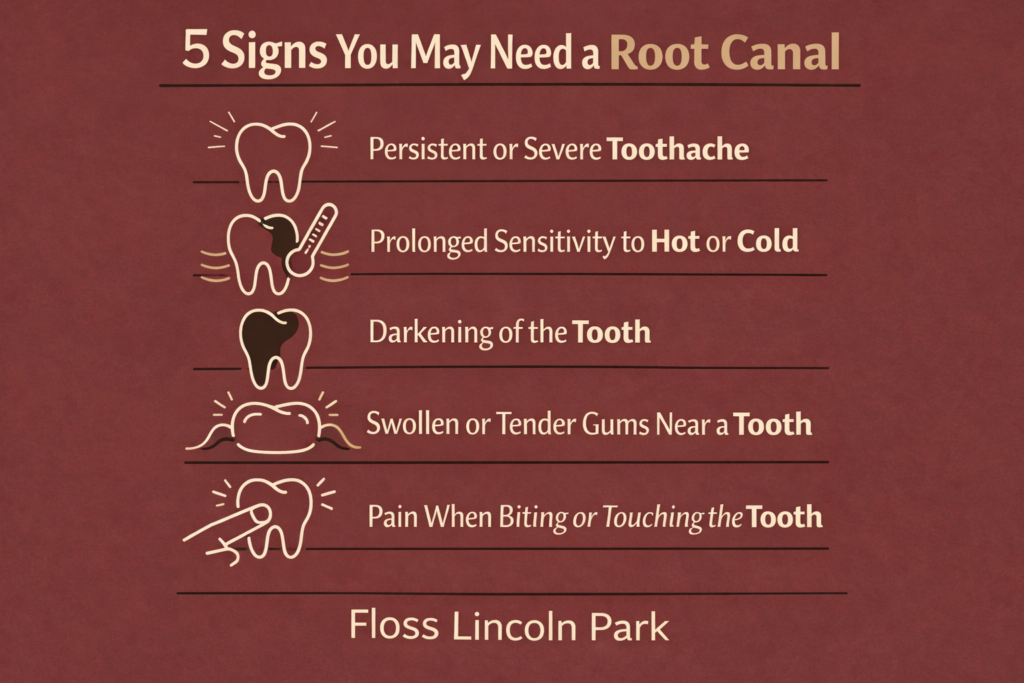
Not all tooth discomfort is created equal, and knowing the difference between a temporary ache and a serious concern can save your smile. Five signs that most commonly indicate pulp damage or infection include the following:
- Persistent or severe toothache: Pain that lingers, intensifies, or radiates into your jaw, ear, or other teeth is one of the clearest indicators that the nerve inside a tooth is affected.
- Prolonged sensitivity to hot or cold: A quick twinge that passes quickly is normal, but sensitivity that lingers for several seconds or minutes after removing the trigger suggests the pulp may be inflamed or dying.
- Darkening of the tooth: A tooth that has shifted to a grayish or brownish color often indicates internal tissue breakdown, which can occur when the pulp deteriorates following trauma or deep decay.
- Swollen or tender gums near a tooth: Puffiness, tenderness, or a small pimple-like bump on the gums near a specific tooth can indicate an abscess forming at the root, a sign that the infection has begun to spread.
- Pain when biting or touching the tooth: Significant discomfort when chewing, or even with light pressure on the tooth, points to inflammation around the root tip, a hallmark symptom of pulp involvement.
If more than one of these symptoms sounds familiar, it’s worth having the tooth evaluated promptly rather than waiting to see if things improve on their own.
Schedule Your Evaluation at Floss Lincoln Park
Ignoring tooth pain rarely makes it disappear; it typically gives the underlying problem more time to worsen. Fortunately, a root canal performed by our experienced, compassionate Floss Lincoln Park team is a straightforward procedure that most patients find far less intimidating than they anticipated. Dr. Silva’s 600-plus hours of advanced continuing education through the University of Florida School of Dentistry and Dr. Jouja’s commitment to creating calm, trust-based environments mean you’re in skilled, caring hands from start to finish.
If any of the symptoms above sound familiar or you simply want peace of mind about a tooth that has been bothering you, we’re here to help. Reach out today to schedule your evaluation and take the first step toward a pain-free smile.


